|
Day
|
Midday Temp C
|
Highest Temp C
|
Max Wind Gust m/s
|
Wind Direction
|
Pressure
|
|
1
|
4.3
|
6.3
|
3.4
|
Cyclonic
|
1005
|
|
2
|
9.1
|
11.3
|
2.7
|
Cyclonic
|
1007
|
|
3
|
6.0
|
9.3
|
4.1
|
N/NE
|
1007
|
|
4
|
5.0
|
5.2
|
4.8
|
N/NE
|
1004
|
|
5
|
7.0
|
10.1
|
4.8
|
N/NE
|
1007
|
|
6
|
9.2
|
11.2
|
2.7
|
N/NE
|
1018
|
|
7
|
7.9
|
8.9
|
4.8
|
S/SE
|
1008
|
|
8
|
7.5
|
7.7
|
2.4
|
S/SE
|
994
|
|
9
|
6.3
|
6.9
|
3.1
|
Cyclonic
|
986
|
|
10
|
7.8
|
8.6
|
2.7
|
S/SE
|
995
|
|
11
|
10.2
|
12.7
|
3.1
|
S/SW
|
990
|
|
12
|
9.3
|
12.1
|
3.4
|
SW
|
996
|
|
13
|
8.8
|
9.2
|
5.4
|
SE
|
1000
|
|
14
|
11.0
|
13.6
|
5.8
|
SE
|
1003
|
|
15
|
10.4
|
13.3
|
3.1
|
Cyclonic
|
1011
|
|
16
|
10.5
|
11.5
|
3.4
|
S/SW
|
1010
|
|
17
|
10.7
|
13.2
|
4.8
|
S/SE
|
1004
|
|
18
|
11.2
|
13.1
|
5.8
|
Cyclonic
|
1009
|
|
19
|
13.9
|
15.7
|
3.1
|
N/NW
|
1020
|
|
20
|
9.5
|
11.8
|
3.3
|
S/SE
|
1023
|
|
21
|
8.9
|
11.3
|
3.1
|
S/SW
|
1014
|
|
22
|
11.2
|
12.2
|
3.4
|
S/SW
|
1010
|
|
23
|
13.9
|
15.4
|
3.1
|
Cyclonic
|
1015
|
|
24
|
10.2
|
10.8
|
3.1
|
S/SW
|
1018
|
|
25
|
10.1
|
13.2
|
2.4
|
Cyclonic
|
1013
|
|
26
|
12.4
|
13.0
|
3.7
|
N/NW
|
1009
|
|
27
|
9.7
|
13.2
|
5.4
|
N/NW
|
1008
|
|
28
|
8.5
|
9.2
|
2.7
|
S/SW
|
1010
|
|
29
|
12.4
|
13.6
|
4.8
|
Cyclonic
|
1014
|
|
30
|
14.1
|
18.6
|
2.7
|
N/NE
|
1018
|
school garden

Friday, 17 May 2013
April in the School Garden
Results from our weather station have now been sorted and shown below. It is pleasant to watch as the daily temperature slowly rises leaving Winter behind. Again very little rain fell in April on the school garden

Monday, 13 May 2013
Remembering the Magna Carta
We start the blog this week with no apologies but once again we dip into Kipling. From his poem 'The Reeds of Runnymede' we quote
"The lissom reeds that give and take
That bend so far but do not break..."
With that in mind the Garden Group decided to replace the aged Hazel hurdles which were on their last legs with a tidy reed screen but on a more formal approach to that made to screen the compost bins. Again we thank our friends at Abbotsbury Swannery for supplying the reed and also their wonderful hedge cutter which gave us a splendid finish to the job.


Despite the cooler weather over the weekend yet another bee species was identified in the garden. The Common Carder Bee.

In the afternoon we traveled across town to pick up some Bamboo which we were donated. It will help screen the Jurassic garden later and also enhance the avenue effect as you approach the garden with the Aeolian Wind organ on the right and the newly planted Bamboo on the left. A sign has been put alongside the Wind Organ giving a brief description of them and their use
 |
| The Bamboo arriving in style! |
The pair of Robins which have nested near to the World War 2 shelter are busy. All weekend the pair were active around the pond area collecting food for their young.

The pair of Blue Tits which have nested in the green nest box in the garden have ten eggs in the nest. The nest was lined by hair supplied by the school in string bags hung in the bird garden. We can only hope that this year the weather will be kind when the young hatch. Last year the young perished as torrential driving rain for a week prevented the adults from foraging for food for them. Fingers crossed!!
 |
| Can anybody count more than ten eggs! |
The garden group will shortly be holding a meeting one evening to discuss fund raising at the open day in June. The date and time and contact will be posted on the blog once decided. We always welcome more helpers
Finally why mention the Magna Carta? Signed in 1215 by King John at Runnymede which made him proclaim certain liberties to the population of England. The most important clauses still remain today and make up the basis of the law in England and Wales. It has been described as the most important constitutional document of all time. We have a lot to thank those Feudal Barons for!
The Magna Carta was inspiration to Kipling's poem and well worth a read.
Sunday, 5 May 2013
A Bee-autiful weekend!
In a week where much attention has been made about the plight of our bees with various insecticides we are pleased to report that we have over the weekend identified six species of bees using the garden, seven including the 'honey' bee. As mentioned in the blog last year we are determined this year to pay a lot more attention to the bees which use our garden. Apart from the more common bumble bees at this time of the year we have identified this weekend other species, which although not particularly that rare, are using the garden.
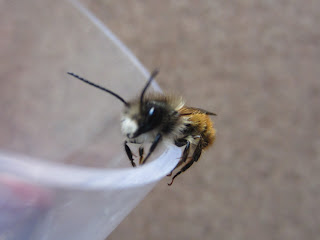
The Red Mason Bee - this one is a male as it has a white tuft on the head

The Tawny Mining Bee


The Ashy Mining Bee


This one was busy by our greenhouse
Other wildlife interest today included a Comma Butterfly sunning itself on the wall and a large Slow Worm found in the compost bin.


More mundane garden jobs included the restoration of a picket fence by the eco-loo and the painting of the new fence between us and the residential home. This has had a wonderful effect of redefining the garden boundary. We are grateful to our neighbours for allowing us to paint the fence green in this way.

Proof that Winter is over is the masses of delightful blossom in the garden. The pear tree, the blossom on the apple trees and the cherry trees are all looking great now as fresh flowers burst into view
Finally next door the nesting Herring Gulls were sorting themselves out. Two is company, three is a crowd but what is five!


Judging from the noise - five Herring Gulls together is not a good combination!
The Red Mason Bee - this one is a male as it has a white tuft on the head


The Tawny Mining Bee


The Ashy Mining Bee


This one was busy by our greenhouse
Other wildlife interest today included a Comma Butterfly sunning itself on the wall and a large Slow Worm found in the compost bin.


More mundane garden jobs included the restoration of a picket fence by the eco-loo and the painting of the new fence between us and the residential home. This has had a wonderful effect of redefining the garden boundary. We are grateful to our neighbours for allowing us to paint the fence green in this way.

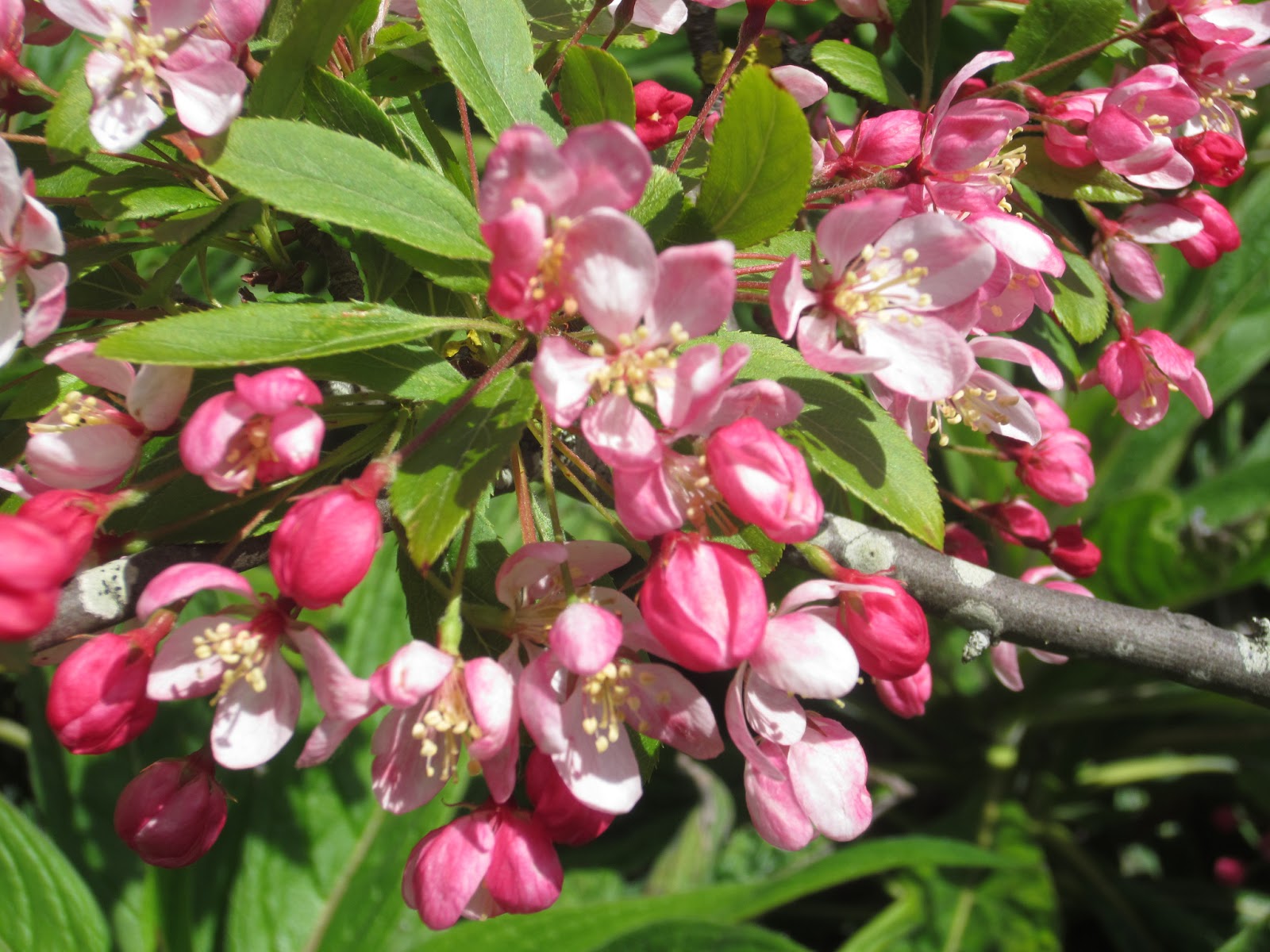
Proof that Winter is over is the masses of delightful blossom in the garden. The pear tree, the blossom on the apple trees and the cherry trees are all looking great now as fresh flowers burst into view
 |
| Pear blossom |
 | ||
| Apple blossom |
 |
| Cherry blossom- perhaps the most delicate! |
Finally next door the nesting Herring Gulls were sorting themselves out. Two is company, three is a crowd but what is five!


Judging from the noise - five Herring Gulls together is not a good combination!
Thursday, 25 April 2013
All change -for the third time!
Over the weekend the garden group volunteers restored the old fence line of the School Environmental Garden. Old fence sections were reused and brought back to life with a few modifications. The garden is now once again secure with just the gate entrance. However the larger restored fence section has been made removable just in case...!


This work was essential if we are to now start the early planning stages of our Jurassic Garden. Boundaries have to be marked out to give us a better picture.
Elsewhere signs that Spring has arrived included the first sighting of the year of a BeeFly. A formidable looking insect but quite harmless.


This work was essential if we are to now start the early planning stages of our Jurassic Garden. Boundaries have to be marked out to give us a better picture.
Elsewhere signs that Spring has arrived included the first sighting of the year of a BeeFly. A formidable looking insect but quite harmless.
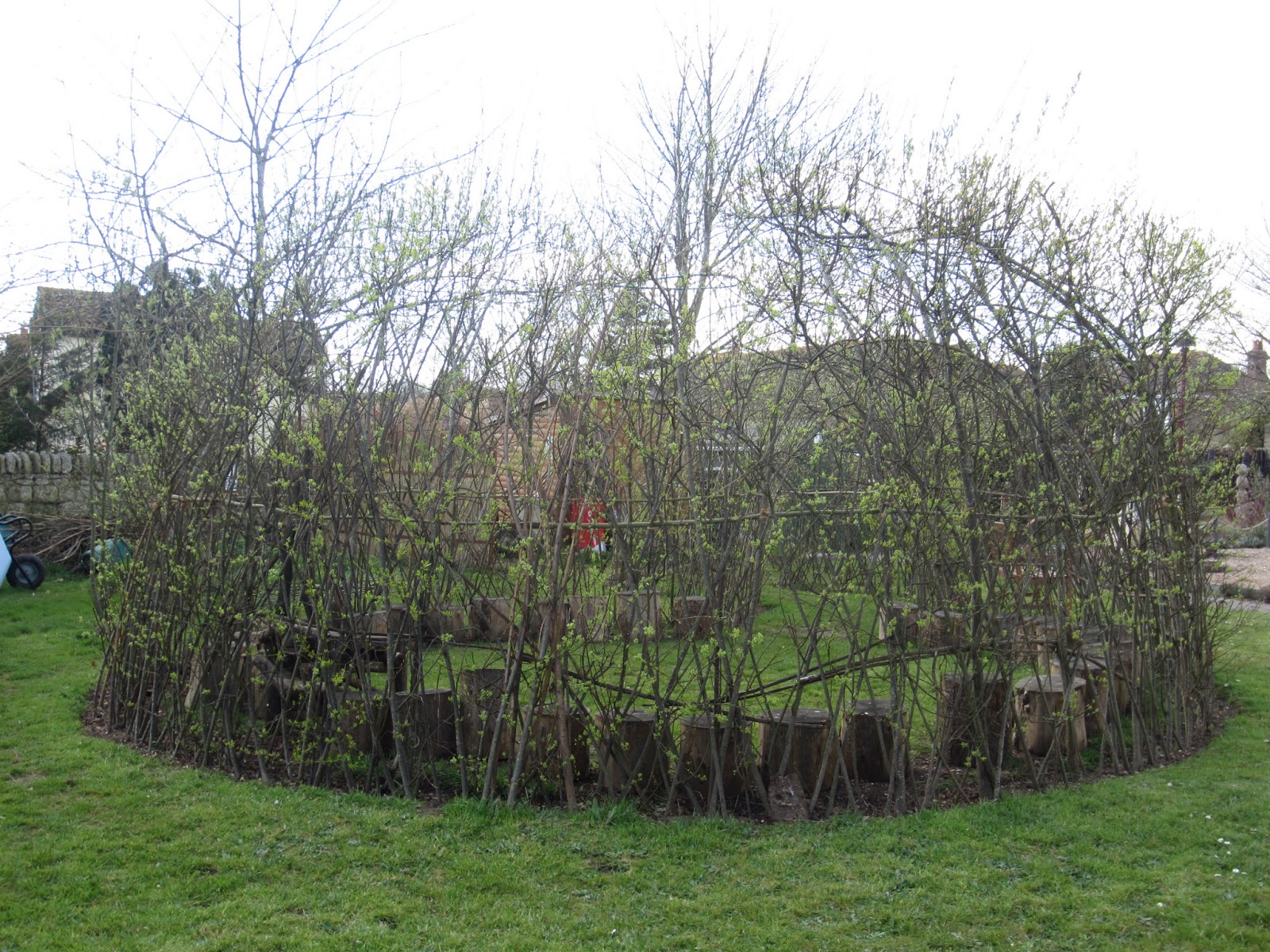
Elsewhere the Willow classroom has started to green up and with a couple of weeks should look good again
In the greenhouse warmer temperatures have triggered the sundews to reappear with their small sticky leaves. The gourds have also been planted up having been taken out of the propagator. Once things warm up they will grow very quickly. This year we are trying Snake Gourds and Loofahs.

In the World War 2 garden the Broad Beans have appeared but the Potatoes are still waiting for warmer weather. Our bed of Jerusalem Artichokes has just started to break the surface of the soil. Hopefully they should grow quickly now.

Finally a picture of the garden with a blue sky!
Wednesday, 17 April 2013
March Weather in the School Garden
The data from our weather station is shown below for the month of March. The 11th March produced the lowest temperature of -2.8C and also that day the strongest wind gust of 10.2m/s. The monthly rainfall total was about 2.7cms.
| Day | Midday Temp C | Highest Temp C | Wind Speed m/s | Wind Direction | Air Pressure | |
| 1 | 7.9 | 8.9 | 2.4 | N/NW | 1024 | |
| 2 | 4.5 | 7.4 | 2.4 | Cyclonic | 1023 | |
| 3 | 5.2 | 5.7 | 3.1 | Cyclonic | 1014 | |
| 4 | 6.8 | 8.4 | 3.7 | SE | 1006 | |
| 5 | 12.6 | 13.1 | 1.7 | Cyclonic | 1001 | |
| 6 | 10.6 | 11.4 | 2.4 | SE/SW | 995 | |
| 7 | 7.6 | 7.9 | 2.4 | SE | 990 | |
| 8 | 9.8 | 10.9 | 1.7 | SE | 996 | |
| 9 | 10.9 | 11.4 | 1.7 | SE | 1000 | |
| 10 | 4.3 | 4.3 | 4.4 | N/NE | 999 | |
| 11 | 0.4 | 0.9 | 5.1 | N/NE | 999 | |
| 12 | 2.9 | 5.7 | 6.5 | N/NE | 1005 | |
| 13 | 7.4 | 9.8 | 2.7 | NW/NE | 1010 | |
| 14 | 8 | 8.8 | 3.1 | S/SW | 1012 | |
| 15 | 9 | 9.8 | 4.8 | S/SE | 1001 | |
| 16 | 9.8 | 9.8 | 4.8 | S/SE | 987 | |
| 17 | 4.1 | 7.7 | 3.1 | N/NW | 985 | |
| 18 | 8.5 | 10.5 | 2.4 | S/SW | 988 | |
| 19 | 7.1 | 11.3 | 1.4 | SE | 993 | |
| 20 | 8 | 10.5 | 3.4 | Cyclonic | 1009 | |
| 21 | 5.5 | 6.1 | 5.1 | SE/NE | 1007 | |
| 22 | 6.5 | 6.5 | 4.4 | Cyclonic | 999 | |
| 23 | 4 | 5.6 | 3.1 | N/NE | 1003 | |
| 24 | 3.1 | 3.1 | 3.1 | N/NE | 1006 | |
| 25 | 3.1 | 4.3 | 3.4 | N/NE | 1008 | |
| 26 | 4 | 4.4 | 3.1 | N/NE | 1006 | |
| 27 | 5.4 | 5.5 | 3.4 | N/NE | 1008 | |
| 28 | 7.3 | 7.3 | 2.7 | N/NE | 1008 | |
| 29 | 7.3 | 8.9 | 2.4 | S/SW | 1004 | |
| 30 | 5.7 | 7.3 | 3.4 | N/NE | 1007 | |
| 31 | 6 | 7.5 | 3.4 | Cyclonic | 1009 | |
Tuesday, 16 April 2013
Spring at last!
It looks as if Spring has finally arrived. Three species of butterfly in the garden this afternoon were observed and plenty of bumble bees. The Chaffinch was singing from his territorial song post above the machinery shed and the pair of Blue Tits were chasing each other around the willow classroom.
In the pond the frogspawn is now small tadpoles

The tadpoles are just finishing eating the jelly like substance which has surrounded them from birth and about to brave the big world outside. They will have plenty of predators. The newts and the dragonfly nymphs are particularly fond of them, as they are easy to catch until they get a little larger and quicker. But realistically from all these tadpoles we only need a few to survive and make it to frogs to continue their existence in the pond.
One the fringe of the pond further evidence of Spring with Primroses and Cowslips in flower


In the greenhouse things are looking good with lots going on.

The better weather is a sign to get thing planted as the soil is warming up. Our stand of Barley needs planting within the next day or so - before the Cuckoos return. Late planted 'Cuckoo Barley' always crops less well. Although we are not farmers we would like a good show!
Saturday, 30 March 2013
Of Gulls and Bees
Recent activity in the school garden involved using our shredder. Over the winter months we had amassed a large pile of garden waste which we put to one side to be shredded. The entire heap was shredded fairly quickly and we got 8 wheelbarrow loads of chippings which we spread onto the path behind the pond.


This weekend we have worked on the Willow Classroom, repairing and replacing some of the wood.It was an interesting day as many migrant birds passed through the garden having recently made landfall at the coast. Many were Chiffchaffs which had returned from West Africa. These birds weigh about 9 grams. The journey they make is amazing for their size. It was also a noisy day as many of the nearby Herring Gulls which were reclaiming their nest sites on nearby buildings were active in and about the garden. At one point a bird opened a bag which had bread in it and started to help itself..

However not be outdone another gull managed to pull off some amazing acrobatics as it stood upside down on the bird table trying to take the meal worms which had been put out for the Robin.

The brief spell of sunshine tricked several Buff-tailed bumble bees to take to the air but their flights were short lived as the temperature dropped as quickly as it had climbed. The bees became unfortunately downed. Some were found and rescued and put into safe warmer places.

By the end of the day the potatoes had been planted in the old tyres and the World War 2 bed, the new Clematis had been planted, and the Honeysuckle tidied and retied to the pergola. A quick look at the pond before we left revealed that some of the frog spawn had 'hatched' and some very small tadpoles were seen swimming about.
Subscribe to:
Posts (Atom)